

Right off the bat, I’m not above using AI for writing. I use it all the time for many things, writing being one of them. Heck, I had it take all of my thoughts for what to write about for this Substack that I word-vomitted onto a document and organized into sections to make it more cohesive to readers like you.
If we’re being honest, AI slop is a problem of our own making. The attempts to censor, curb personality, sand down every edge of writing into “formality” has led us here. It’s why I truly hope AI will lead to the pendulum swinging back the other way and bringing personality with it.
The Formality Problem
There’s this invisible bar that exists between formal and casual, and everyone’s performing a register that doesn’t actually fit them.
The formal-to-casual bar stresses me out and at this point… I give up! I literally reply to peoples’ emails and LinkedIn DMs like I’m texting them unless I have some obvious reason to be formal. The more we try to enforce these distinctions, the weirder and more stilted everything sounds.
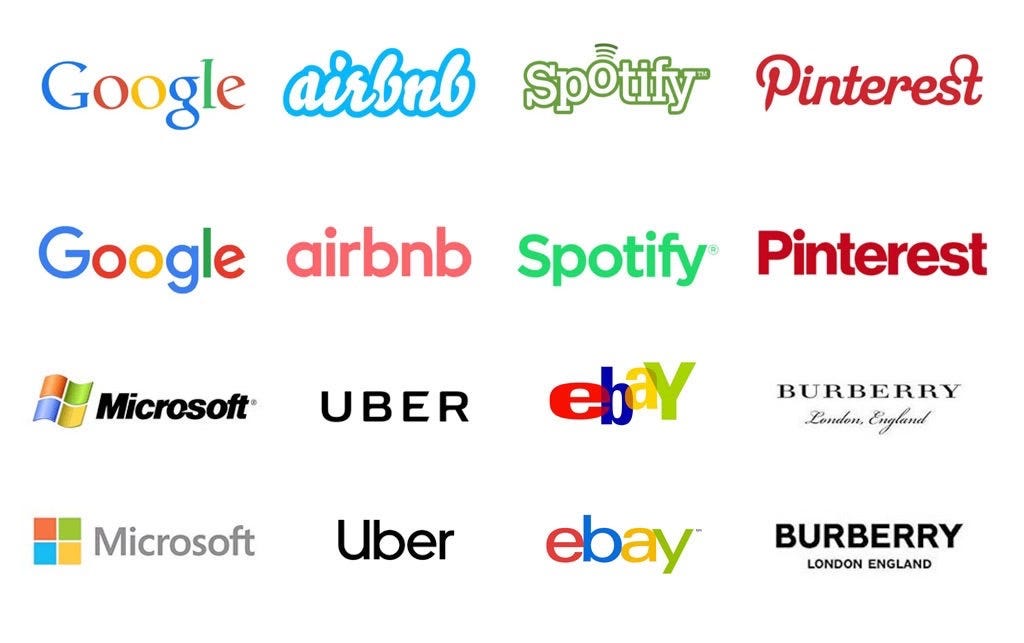
If you need a visual representation of what I’m talking about: look at the way brands changed their icons to be more minimalist. As a self-proclaimed maximalist, I hate this. Everything got flatter, rounder, more generic… and for what? To seem approachable? To seem professional? It’s the same energy. Smooth out the personality until there’s nothing left to sand.
People who DM me on LinkedIn trying to not be so uptight are still getting the same message across. Uptight-ness didn’t make it more correct. It just made it more exhausting to write and more exhausting to read and more often than not, why I end up taking forever to respond over DMs unless I just let myself respond naturally like myself!
AI Made Things Worse (But Not How You Think)
I’ve always believed that AI has only amplified existing problems that already existed and writing is no exception. AI didn’t create the slop. It automated a failure mode that already existed.
When you build a tool optimized to sound professional and inoffensive, you get professional and inoffensive and for a lot of us, that’s a direct reflection of what we asked for. We trained these things on the same overcorrected, personality-stripped content we’d been producing for years, and then acted surprised when it came out sounding like complete corpo-jargon.
For the more visual people, it’s like how so many logos of companies have been stripped of personality over time. Genuinely, I’ve never seen a rebrand that I’ve liked and that still continues to today. Also see Corporate Memphis (you’ve probably seen it before)
Disclaimer: I’m not a professional designer, these are just my thoughts as someone with eyes.
My LinkedIn has been a year-long experiment of seeing how much I can get away with taking my unhinged adventures and projects to a “normie” audience, and after I got a job, I thought that would be the end of it. Weirdly enough, I ended up having a lot of fun with it and that’s really what matters to me at the end of the day. If I’m not having fun… what’s the point? (aside from networking, getting a job, etc)
How I Actually Write Things With AI
I am a big believe of transparency and thought it would be appropriate to at least outline what my current workflow is, as someone who just defined some semblance of a workflow last year. Tldr; I talk to myself a lot more now
Most people would call what I do journaling. I don’t for many reasons. I’ve tried journaling before and it was mainly me venting into paragraphs of blobs and maybe that’s what this comes off as well, but I’d like to think there’s more cohesion to what I’m trying to express.
When I’m writing things, I don’t really care about the words. I care about the ideas and I need to get the core ones out of my head before they get lost in the never-ending stream of thoughts.
My solution? I yap. I talk at Claude, dump everything, and let it pull out the essential pieces. The substance of my thoughts and my ideas stays the same and I’ll often tell it to preserve as much of my original voice as possible before it spits something back at me. If something’s factually wrong (like saying I read a manga when I actually watched the anime), I’ll fix it. Otherwise? Clean it up, structure it, whatever. It’s still mine where it counts.
The pipeline:
brain → yap (Willow dictation) → Claude → structured output → Craft ('my “second brain” AKA a fun way for me to store MD files, think Obsidian but cuter)
That’s it. No writing. No formatting. No maintaining a system. The only step I’m actually responsible for is having the thought.
Why Formatting Can Die
Here’s the paradox: I like things properly formatted. I hate being the one to format them.
When I format things myself, I either break the system trying to min-max it, cramming stickers on a sheet, ignoring padding guidelines, making it work my way, or I abandon it entirely because the overhead isn’t worth it. The exceptions are tactile: scrapbooking, sticker books. Physical arrangement is much easier than digital templating.
This is why Notion failed me and Craft works. Notion is templates staring at you, demanding to be filled in and maintained. Craft is simpler basically a prettier Obsidian, less structure, and MCP-able so Claude can write directly to it without me touching it.
The underlying philosophy: the first step to reducing friction is figuring out where the friction actually is. Then eliminate it or route around it. I don’t adapt to systems — I find systems that adapt to how my brain works.
Back to What Kind of Writing You Can Expect Here
I’m not promising I won’t use AI to write out certain paragraphs. I’ve been drafting out the first few issues of this newsletter by dumping thoughts into various notes and then using AI to put them together. That being said, everything expressed here are all organic beliefs, unhinged ideas, and specific takes that I don’t think AI would ever be able to come up with on its own. That’s what I want to focus on.
So, let me lay it all out here:
I won’t just have AI generate an article from scratch because that would be boring and pointless and kind of lame and cringe
I will continue to have AI (mainly my boi Claude) be my notetaker when I’m reading out scribbles from my notebook or brain dumping while taking a dump so I don’t forget about the thoughts I want to write out
This is a recurring theme, we’ll be coming back to this a lot
I will be proofreading everything AI might “generate on my behalf” although honestly I end up rewording what it gives me anyways
It’s way easier for me to edit than to deal with the blank word doc problem so I don’t mind that
A lot of the section designations are probably coming from AI, I’m having way more fun filling in the gaps
This newsletter is my proof of concept of what it looks like to write without care about the formalities. If I have to AI-ify my writing, then something has gone terribly wrong. Until then, I hope you’ll follow me on this journey/experiment/hopefully coherent-stream-of-thoughts!